
How to Use a Body Shape Calculator (And Actually Do Something With the Result)
Photo Credit:@Rayanne Walters
Here's something I've noticed after years of working as a stylist: most women have tried to figure out their body shape at some point. They Googled it, took some random quiz, got a result and then promptly went back to buying whatever was on sale at Zara.
The result sat there, meaningless, because nobody explained what to actually do with it.
That's what this guide is for. We're going to walk through exactly how to use a body shape calculator, what your measurements mean, how to interpret your result, and most importantly how to translate that result into a wardrobe that actually works for your body. No guesswork, no vague advice, no "dress for your shape" tips that could apply to literally anyone.
What Is a Body Shape Calculator?
Photo Credit:@Brunna Rhychellen
A body shape calculator is a tool that takes your measurements bust, waist, and hips and uses a formula to determine which of the five main body shapes your proportions fall into. It's essentially doing the math that a personal stylist would do in the first five minutes of a fitting appointment.
The five body shapes it can identify are:
Hourglass — bust and hips are roughly equal with a clearly defined, narrow waist
Pear (Triangle) — hips are wider than shoulders, with fullness below the waist
Apple (Round) — fullness in the midsection, with shoulders and hips that are often similar in width
Rectangle (Athletic) — similar width from shoulders to hips, with minimal waist definition
Inverted Triangle— shoulders and bust are wider than the hips
A body shape calculator is different from a body shape quiz. The calculator uses your actual measurements numbers from a tape measure while a visual quiz uses questions about your proportions and how clothes fit. Both can get you to the right answer; the calculator tends to be more precise, while the quiz is great if you're going by feel or don't have a tape measure nearby.
Not sure which to use? Take our free quiz or use the measurement calculator here →
What Measurements Do You Need?
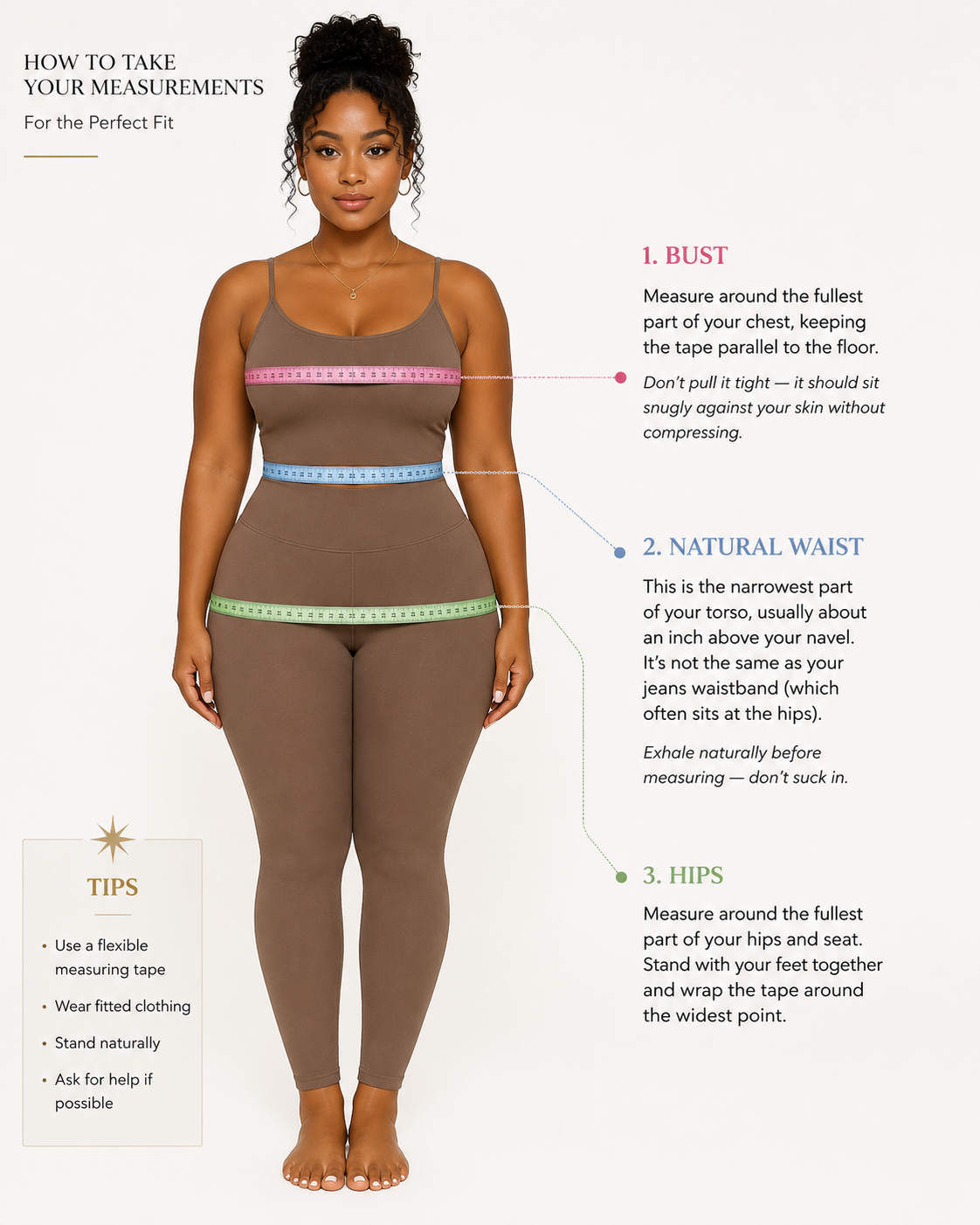
To use a body shape calculator, you need three core measurements:
1. Bust Measure around the fullest part of your chest, keeping the tape parallel to the floor. Don't pull it tight it should sit snugly against your skin without compressing.
2. Natural Waist This is the narrowest part of your torso, usually about an inch above your navel. It's not the same as your jeans waistband (which often sits at the hips). Exhale naturally before measuring don't suck in.
3. Hips Measure around the fullest part of your hips and seat. Stand with your feet together and wrap the tape around the widest point.
Optional: Shoulders Measure from shoulder point to shoulder point across your back. This one's optional but it makes a real difference for identifying the inverted triangle shape, because shoulder-to-hip ratio is the key factor there.
One thing I always tell my clients: measure twice, second-guess once. Most measurement errors happen because people measure the wrong spot. The natural waist especially a lot of women measure at the hips by mistake, which throws the whole calculation off.
How to Use a Body Shape Calculator Step by Step

Photo Credit:@Reichel M.
Once you have your numbers, here's exactly what to do:
Step 1: Write your measurements down. You'd be surprised how many people try to hold three numbers in their head while filling out a form. Just write them on your phone notes.
Step 2: Decide on your unit. Inches or centimeters either works, just stay consistent across all measurements. Our calculator accepts both.
Step 3: Enter your measurements. Bust, waist, hips and shoulders if you have them.
Step 4: Get your result. The calculator compares your ratios and identifies your shape. Here's a quick version of the logic it's using behind the scenes:
If your bust and hips are within about 1 inch of each other and your waist is 9+ inches smaller than your hips → Hourglass
If your hips are more than 2 inches wider than your bust → Pear
If your shoulders or bust are more than 2 inches wider than your hips → Inverted Triangle
If your bust is wider than your hips and especially your waist → Apple
If your bust, waist, and hips fall within about 5 inches of each other → Rectangle
Step 5: Read your full result — and don't just skim the shape name. The style tips and silhouette recommendations are the actual useful part.
Use the body shape calculator here →
What If the Quiz Feels More Like You?
Some women find measurements uncomfortable maybe because of where they're at with their body, or because they genuinely can't tell where their natural waist is (this is more common than you'd think), or because they're between sizes and feel like the numbers don't reflect how they look.
If that's you the visual quiz is just as valid. It asks six questions about your proportions things like where you carry weight, whether your shoulders or hips are wider, and how jeans tend to fit you. The scoring system behind it uses the same logic as the calculator, just translated into visual cues instead of inches.
The quiz result is also great as a sanity check after using the calculator. If you got "Rectangle" on the calculator but every quiz answer pointed to "Pear," trust what you see in the mirror over what the math says.
What to Do With Your Body Shape Result

Photo Credit:@Keana DuBoise
Getting your body shape result is step one. The real work is figuring out which specific silhouettes, cuts, and styling rules actually apply to your version of that shape because pear shapes can range from barely curvy to dramatically hourglass-adjacent, and what works for one end of that spectrum doesn't always work for the other.
Here's where to go after you get your result:
Hourglass → Your goal is to highlight your waist without over-emphasizing curves. Wrap dresses, belted blazers, and high-waisted bottoms are your foundation. Full Hourglass Style Guide →
Pear → Balance is your strategy — draw the eye upward with bold tops, structured shoulders, and statement necklines. A-line skirts and bootcut jeans are your best friends. Full Pear Shape Guide →
Apple → The goal isn't to hide your middle; it's to create a strong vertical line. V-necks, wrap dresses, and empire waist styles do this beautifully. Full Apple Shape Guide →
Rectangle → Your canvas is versatile. The play is to create shape — belted waists, peplum tops, ruffled hems, and A-line skirts all add the definition your proportions don't naturally have. Full Rectangle Shape Guide →
Inverted Triangle → You want to add visual weight below the waist. Wide-leg trousers, full skirts, and prints on the bottom half balance out your strong upper body. Full Inverted Triangle Guide →
And if your concern isn't your overall shape but specific areas — like dressing a belly, styling fuller arms, or balancing a top-heavy figure the Dress for Your Figure hub has guides built around exactly that.
The Most Common Mistakes Women Make With Body Shape Calculators
Photo Credit:@Ajaila Walker
Mistake 1: Measuring over clothes. Even a thin layer of fabric adds an inch or two in the wrong places. Always measure against your skin or on top of thin, fitted underwear.
Mistake 2: Measuring at the wrong spots. The natural waist isn't the smallest part of your stomach when you pull it in. It's the natural narrowest point when you're relaxed. For hips, people often measure too high — go for the absolute fullest part of your seat.
Mistake 3: Getting a result and then only buying what "flatters." This is the one that frustrates me most. Knowing your body shape should give you more options, not fewer. The rules are a starting point, not a dress code. Once you understand why certain silhouettes work, you can apply that logic to any trend, any season, any occasion — and start bending the rules intentionally.
Mistake 4: Expecting one shape to cover everything. A lot of women are a combination — an hourglass that runs apple-adjacent in the belly, or a rectangle with pear-leaning hips. If your results feel like a split between two shapes, look at guides for both. The overlap is often where the best styling advice lives.
Mistake 5: Taking the result too literally. The calculator identifies your dominant proportions. It doesn't account for your height, your torso length, how you carry weight in specific areas, or what you personally feel comfortable in. Use it as a starting point and then adjust based on what you actually see in the mirror.
Frequently Asked Questions
Can a body shape calculator work for plus-size women? Yes the calculator uses ratios, not raw measurements, so it works the same regardless of your size. A size 6 hourglass and a size 22 hourglass have the same proportional relationship between bust, waist, and hips.
Does body shape change with weight loss or gain? It can. Your overall shape tends to stay relatively consistent, but where you gain or lose weight first can shift your ratios. Retake the calculator any time your measurements change significantly.
What if I get a different result from the calculator and the quiz? Trust the mirror. The calculator is more precise, but the quiz picks up on things measurements can't like how you perceive your silhouette and where clothes consistently fit or don't fit. If they disagree, you're probably between two shapes. Read both guides.
Is there a body shape test for petite or tall women? The calculator works the same regardless of height it's based on ratios, not absolute measurements. That said, height and torso-to-leg proportions affect how silhouettes actually look on your body, so for petite women especially, proportion-based styling is just as important as shape-based styling.
Ready to Find Yours?
The calculator takes less than a minute. The quiz takes about two. Either way, you'll walk away with a clear result and a starting point for dressing in a way that actually makes sense for your body.
→ Take the free body shape quiz or use the calculator
And once you have your result, bookmark the Body Shape Style Hub it has every guide, every jeans roundup, every outfit formula organized by shape so you can come back to it whenever you need it.
You May Also Like:
How to Determine Your Body Shape (The Right Way—No Confusing Charts)
How to Dress for Your Body Type: A Guide That Actually Makes Sense
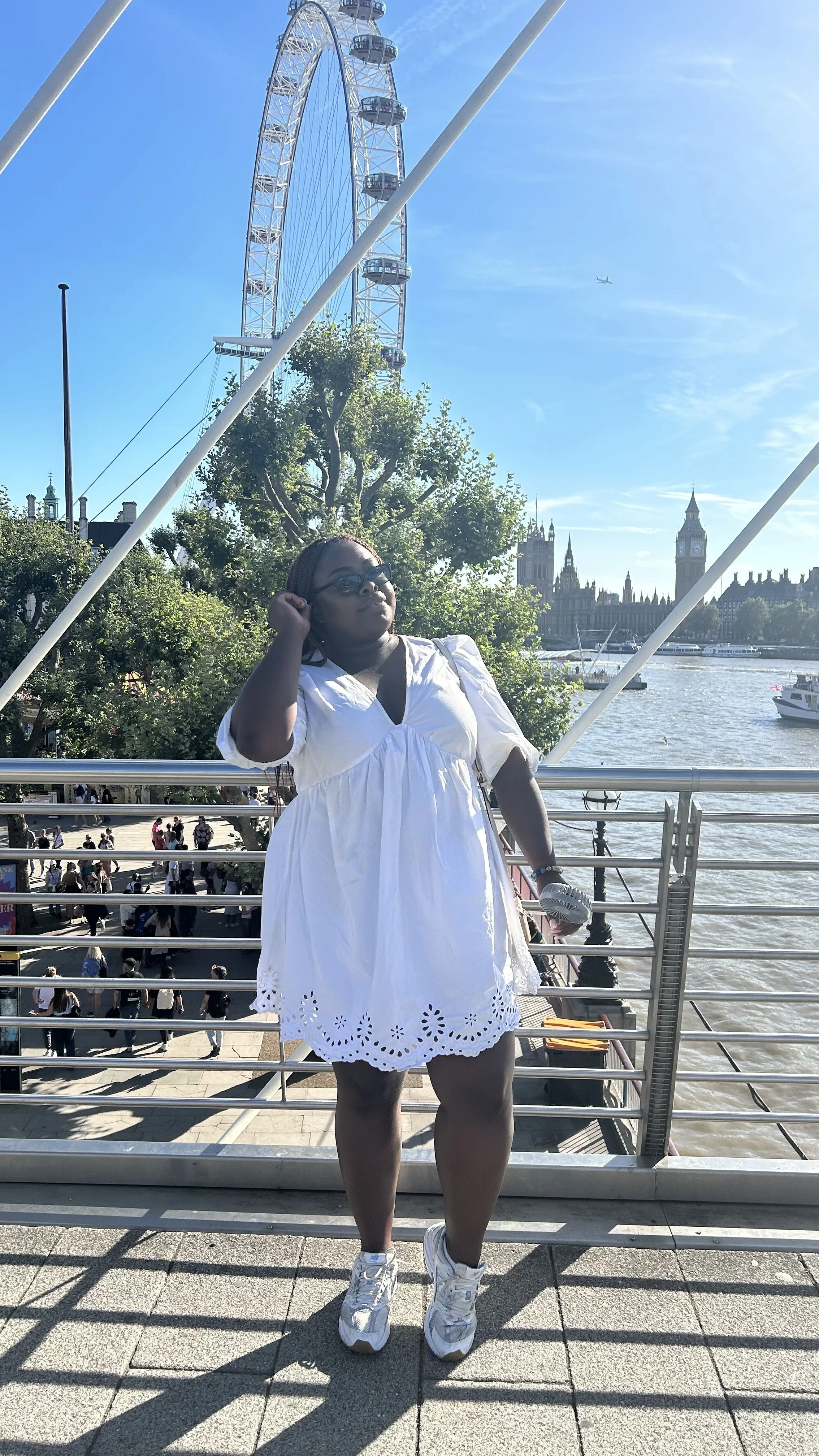


✦ Creator images used for editorial purposes only. All rights belong to their respective creators. We always link and give credit.
✦ Check Out Our Men's Site
Trending on MensOutfitsDaily